I’m Daniel Abramovici, founder of Form & Wonder. For more than two decades, I’ve built a career at the intersection of animation, visual storytelling, technology, and education, working in roles ranging from creative and CG supervision to producing and showrunning.
I spent more than a decade at Blue Sky Studios, contributing to films including the Ice Age franchise, Rio, The Peanuts Movie, and Spies in Disguise. I later held senior creative and production roles at Moonbug Entertainment and Nickelodeon Animation, where I served as Co-Executive Producer, Showrunner, and CG Supervisor on The Fairly OddParents: A New Wish.
Throughout my career, whether working with artists, leading large creative teams, developing new production approaches, or teaching students, I’ve returned to the same fundamental skills: observation, curiosity, experimentation, problem-solving, and the confidence to develop your own ideas.
Form & Wonder grew from a simple belief: children need opportunities not just to make things, but to look closely, think for themselves, experiment, and discover their own creative voice.
Creativity has shaped my entire life.
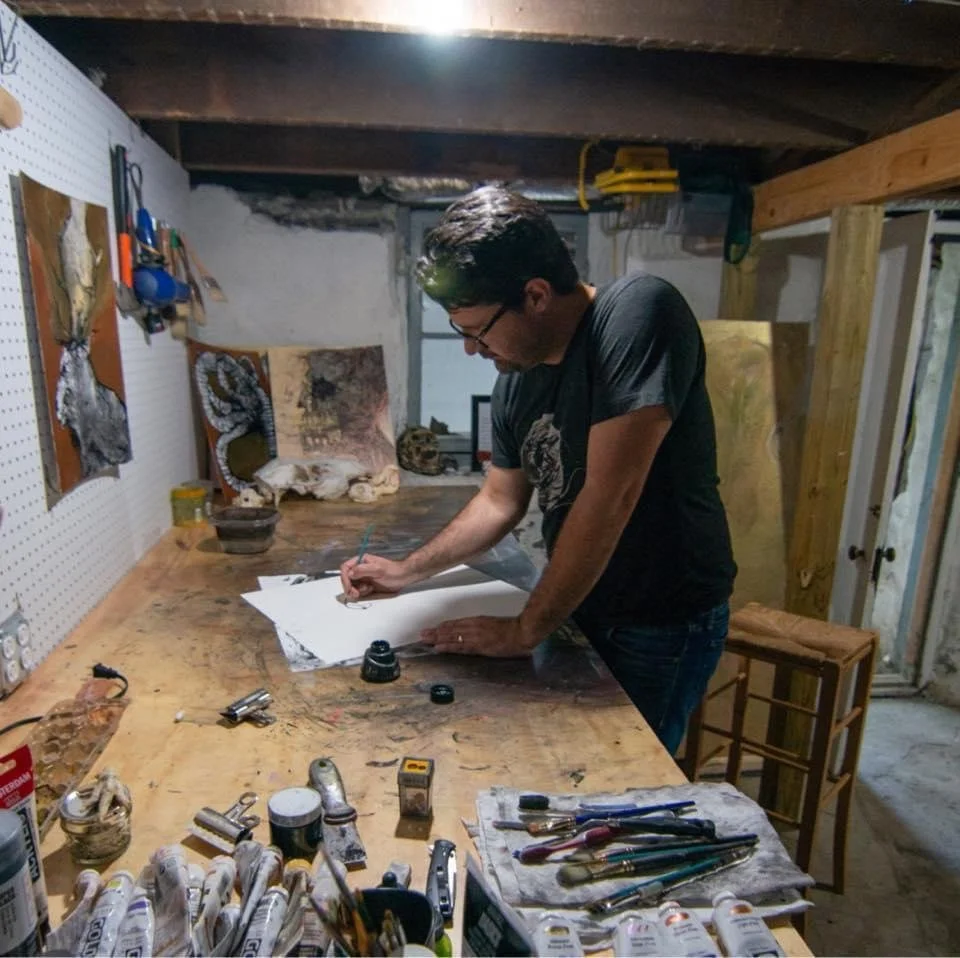
Why I Created Form & Wonder
Children are growing up in a world designed for speed.
Answers arrive instantly. Entertainment is always available. Algorithms decide what comes next. And now, with AI, almost anything can be generated in seconds.
These tools can be extraordinary, but I believe they make something else increasingly valuable: the ability to slow down, pay attention, stay curious, and think independently.
Creativity requires time. It means looking at something long enough to notice what you missed at first. It means sitting with uncertainty, trying something that may not work, changing direction, and discovering an answer rather than simply being given one.
I created Form & Wonder to give children a place to practice exactly that.
Through visual art, children are encouraged to observe deeply, ask questions, experiment, make their own choices, and stay engaged with an idea long enough to see where it might lead.
In a world of instant answers, I want to protect the value of discovery.
A Career Built Around Creativity
More than two decades of turning ideas into something real.
My career has taken me from artist and supervisor to producer, showrunner, educator, and creative technology leader.
I spent more than a decade at Blue Sky Studios, working across films including the Ice Age franchise, Rio, The Peanuts Movie, and Spies in Disguise. My work later took me to Moonbug Entertainment and Nickelodeon Animation, where I held senior creative and production leadership roles, including Co-Executive Producer, Showrunner, and CG Supervisor.
Along the way, I’ve helped develop new creative technologies and production workflows, contributed to patented innovations, explored immersive and emerging technologies, and led teams of artists and creators through complex creative challenges.
I also spent four years teaching at the School of Visual Arts in New York City and have shared my work and ideas at industry gatherings including SIGGRAPH, FMX, and Annecy.
But across all of those experiences from feature films and television series to classrooms and emerging technology—the most important lessons have rarely been about a particular piece of software or technique.
They have been about how to look, how to question, how to solve problems, how to collaborate, and how to keep going when the answer isn't obvious.
Those ideas are at the heart of Form & Wonder.
From the Studio to the Classroom
Art is the vehicle. Creative thinking is the destination.
Form & Wonder isn't about training children to become professional artists. I use visual art because making something with your hands creates an extraordinary opportunity to practice skills that extend far beyond the page.
Children learn to observe before acting. They encounter problems without predetermined answers. They make choices, test ideas, reconsider them, adapt when something doesn't work, and decide for themselves when something feels complete.
There isn't always a “right” result. That matters. Because learning to create also means learning to tolerate uncertainty, trust your judgment, recover from mistakes, and remain curious when you don't immediately know what to do next.
My role isn't to show children exactly what to make. It's to create the conditions in which they can notice more, wonder more, experiment more, and develop confidence in their own thinking.
The goal isn't to teach children what to create. It's to help them discover how to see, think, and create for themselves.